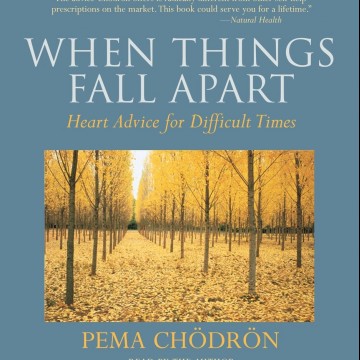
“Life is a good teacher and a good friend. Things are always in transition, if we could only realize it. Nothing ever sums itself up in the way that we like to dream about.
…To stay with that shakiness — to stay with a broken heart, with a rumbling stomach, with the feeling of hopelessness and wanting to get revenge — that is the path of true awakening. Sticking with that uncertainty, getting the knack of relaxing in the midst of chaos, learning not to panic — this is the spiritual path. Getting the knack of catching ourselves, of gently and compassionately catching ourselves, is the path of the warrior. We catch ourselves one zillion times as once again, whether we like it or not, we harden into resentment, bitterness, righteous indignation — harden in any way, even into a sense of relief, a sense of inspiration.”
~ Pema Chodron, When Things Fall Apart Heart Advice for Difficult Times
“The world which men have made isn’t working. Something needs to change. To change the world, we women need first to change ourselves – and then we need to change the stories we tell about who we are. The stories we’ve been living by for the past few centuries – the stories of male superiority, of progress and growth and domination – don’t serve women and they certainly don’t serve the planet. Stories matter, you see.”
Myths are ancient wisdom stories that can teach us how to navigate life. In one Egyptian myth, the Goddess Isis weeps and weeps in grief for what she has lost. And her tears bring balance to the land; her tears nourish the earth and the barren soil heals and becomes fertile.
Could it be that the grief we are feeling right now is a healing balm? Might our tears be the medicine that our country and our Earth need to heal?
Let your tears flow. They may heal more than your heart.
“The woman who takes the time to grow herself in darkness becomes familiar — perhaps for the first time — with the real source and containment of her psychic strength. No longer is her strength dissipated in obeying an idealized father figure, in pleasing a lover, in trying to satisfy a perpetually unsatisfied mother figure, in accommodating to a patriarchal organization or culture, in appeasing the inner witch who tells her she is worthless. No longer is her strength lost to obeying compulsions, drives, and obsessions that can slip in during the dark night of the soul and substitute for the real thing.
“And what is the real thing, the thing for which she longs? The love affair with her own spirit, the inner marriage that commits her to her destiny, the rituals of soul that feed her deepest hunger, and the sense of being pregnant with her Self, her creative essence.”
“We must remember that the feminine works in a non-linear fashion, so while many are impatiently looking to new-age checklists and dream dictionaries for a bottom-line, the final answer, they rarely find anything enduring. This is because there is a greater genius at work which we could never integrate all at once. Instead we must follow a mysterious and melodic trail, which lures us deeper into the unknown, fortifying our trust in that which is parenting us. One day, sometimes years down the line, we finally understand how the symphony resolves itself.”
“Cure yourself, with the light of the sun and the rays of the moon. With the sound of the river and the waterfall. With the swaying of the sea and the fluttering of birds.
Heal yourself, with the mint and mint leaves, with neem and eucalyptus.
Sweeten yourself with lavender, rosemary, and chamomile.
Hug yourself with the cocoa bean and a touch of cinnamon. Put love in tea instead of sugar and take it looking at the stars.
Heal yourself, with the kisses that the wind gives you and the hugs of the rain.
Get strong with bare feet on the ground and with everything that is born from it.
Get smarter every day by listening to your intuition, looking at the world with the eye of your forehead.
Jump, dance, sing, so that you live happier.
Heal yourself, with beautiful love, and always remember… you are the medicine. “
The Spaniards came to our village in 1524, but they couldn’t get anybody to go to their church, so they demolished our old temple and used the stones to build a new church on the same site. (This was a common practice.) But the Tzutujil people are crafty. They watched as the old temple stones were used to build the new church, and they memorized where each one went. As far as the Tzutujil were concerned, this strange, square European church was just a reconfiguration of the old. (When I was learning to be a shaman, I had to memorize where all those damn stones were, because they were all holy. It was like being a novice taxi driver in London.)
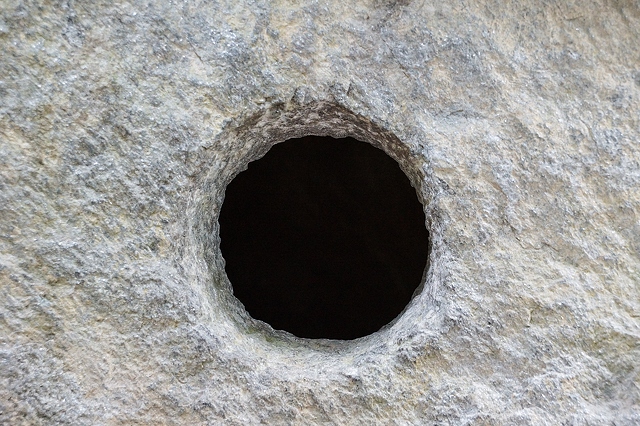
The Catholic priests abandoned the village in the 1600s because of earthquakes and cholera, then came back fifty years later and found a big hole in the middle of the church. “What is that?” they said. By then, the Indians knew the priests destroyed everything relating to the native religion, so the Indians said, “When we reenact the crucifixion of Jesus, this is the hole where we put the cross.”
In truth, that hole was a hollow place that was never to be filled, because it led to another hollow place left over from the temple that had been there originally, and that place was connected to all the other layers of existence. For four and a half centuries, the Indians kept their traditions intact in a way that the Europeans couldn’t see or understand. If the Spaniards asked, “Where is your God?” the Indians would point to this empty hole. But when the American clergy came in the 1950s, they weren’t fooled. They said, “This is paganism.” And so, eventually, they filled the empty place with concrete.
I was there when that happened, in 1976. I was livid. I went to the village council and ranted and raved about how terrible it was. The old men calmly smoked their cigars and agreed. After an hour or so, when I was out of breath, they started talking about something totally unrelated. I asked, “Doesn’t anybody care about this?”
“Oh, yeah,” they said. “We care. But these Christians are idiots if they think they can just eradicate the conduit from this world to the next with a little mud. That’s as ridiculous as you worrying about it. But if you must do something, here’s a pick, shovel, and chisel. Dig it out.”
So some old men and I dug out the hole. Then the Catholics filled the hole back up, and two weeks later we dug it out again. We went back and forth this way five times until, finally, somebody made a stone cover for the hole, so the Catholics could pretend it wasn’t there, and we could pull the cover off whenever we wanted to use it.
That’s how the spirit is now in this country. The hole, the hollow place that must be fed, is still there, but it’s covered over with spiritual amnesia. We try to fill up that beautiful hollow place with drugs, television, potato chips — anything. But it can’t be filled. It needs to be kept hollow.