Keep It Hollow

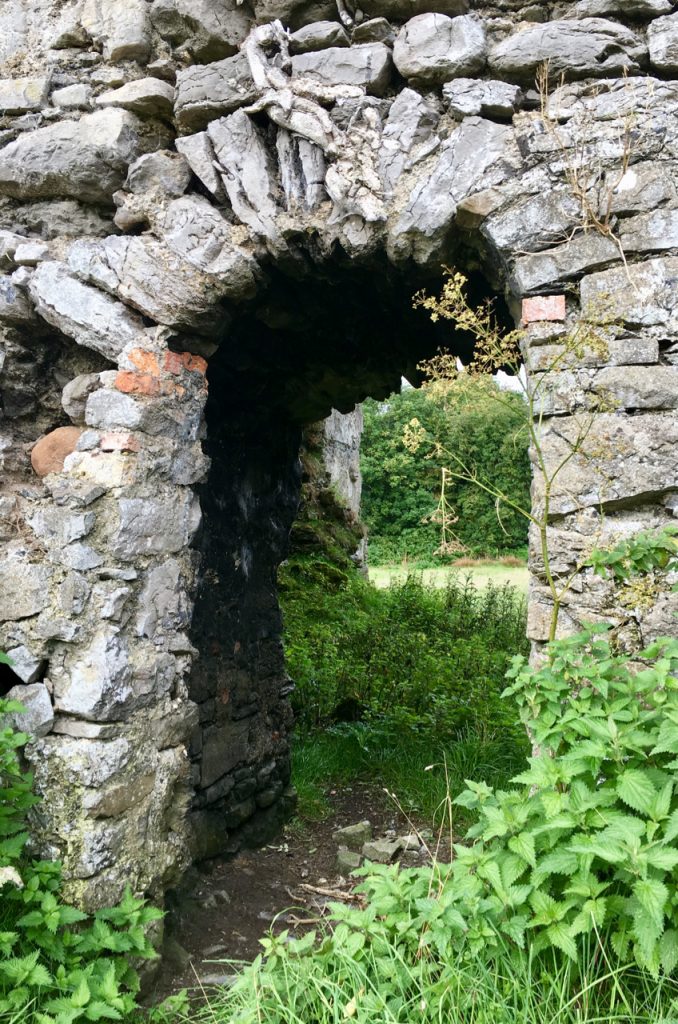
The Spaniards came to our village in 1524, but they couldn’t get anybody to go to their church, so they demolished our old temple and used the stones to build a new church on the same site. (This was a common practice.) But the Tzutujil people are crafty. They watched as the old temple stones were used to build the new church, and they memorized where each one went. As far as the Tzutujil were concerned, this strange, square European church was just a reconfiguration of the old. (When I was learning to be a shaman, I had to memorize where all those damn stones were, because they were all holy. It was like being a novice taxi driver in London.)

The Catholic priests abandoned the village in the 1600s because of earthquakes and cholera, then came back fifty years later and found a big hole in the middle of the church. “What is that?” they said. By then, the Indians knew the priests destroyed everything relating to the native religion, so the Indians said, “When we reenact the crucifixion of Jesus, this is the hole where we put the cross.”


In truth, that hole was a hollow place that was never to be filled, because it led to another hollow place left over from the temple that had been there originally, and that place was connected to all the other layers of existence.
For four and a half centuries, the Indians kept their traditions intact in a way that the Europeans couldn’t see or understand. If the Spaniards asked, “Where is your God?” the Indians would point to this empty hole. But when the American clergy came in the 1950s, they weren’t fooled. They said, “This is paganism.” And so, eventually, they filled the empty place with concrete.


I was there when that happened, in 1976. I was livid. I went to the village council and ranted and raved about how terrible it was. The old men calmly smoked their cigars and agreed. After an hour or so, when I was out of breath, they started talking about something totally unrelated. I asked, “Doesn’t anybody care about this?”


“Oh, yeah,” they said. “We care. But these Christians are idiots if they think they can just eradicate the conduit from this world to the next with a little mud. That’s as ridiculous as you worrying about it. But if you must do something, here’s a pick, shovel, and chisel. Dig it out.”


So some old men and I dug out the hole. Then the Catholics filled the hole back up, and two weeks later we dug it out again. We went back and forth this way five times until, finally, somebody made a stone cover for the hole, so the Catholics could pretend it wasn’t there, and we could pull the cover off whenever we wanted to use it.


That’s how the spirit is now in this country. The hole, the hollow place that must be fed, is still there, but it’s covered over with spiritual amnesia. We try to fill up that beautiful hollow place with drugs, television, potato chips — anything. But it can’t be filled. It needs to be kept hollow.


~Martin Prechtel

Who Is In Control?

For many of us, this may be the first time in our lives that we have felt so little control over our own destiny and the destiny of those we love. This lack of control initially feels like a loss, a humiliation, a stepping backward, an undesired vulnerability. However, recognizing our lack of control is a universal starting point for a serious spiritual walk towards wisdom and truth.

To be in control of one’s destiny, job, or finances is nearly an unquestionable moral value in Western society. The popular phrase “take control of your life” even sounds mature and spiritual. It is the fundamental message of nearly every self-help book. On a practical level, it is true, but not on the big level. Our bodies, our souls, and especially our failures teach us this as we get older. We are clearly not in control, as this pandemic is now teaching the whole planet.

Learning that we are not in control situates us correctly in the universe. If we are to feel at home in this world, we have to come to know that we are not steering this ship. That teaching is found in the mystical writings of all religions. Mystics know they are being guided, and their reliance upon that guidance is precisely what allows their journey to happen. We cannot understand that joy and release unless we’ve have been there and experienced the freedom for ourselves.

~Richard Rohr

🌀

#surrender

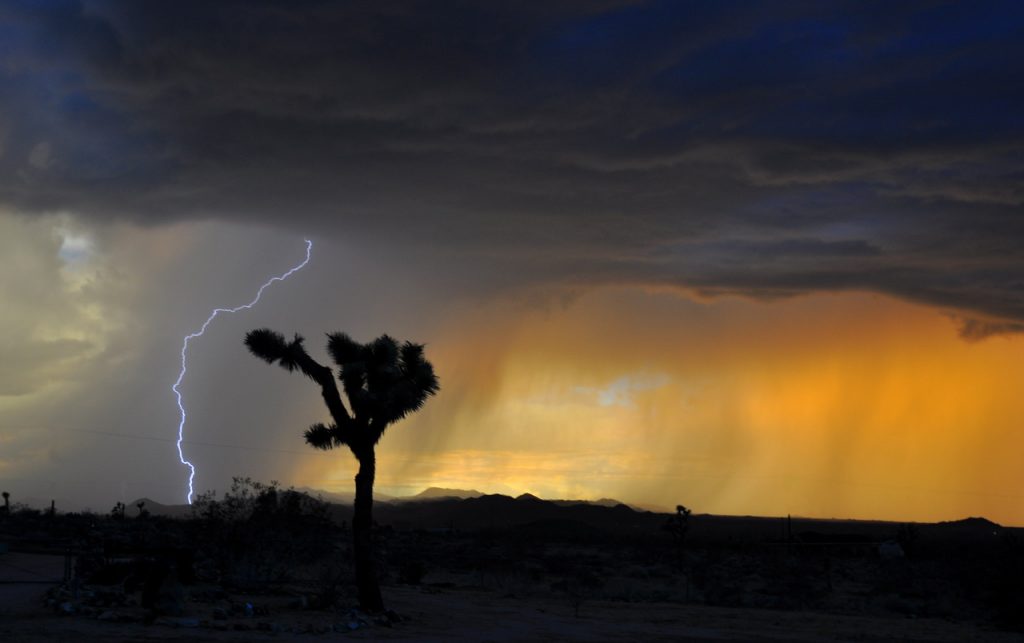
Image: Desert Electric
by Jessie Eastland

The Giant Heart of the World

“I tell you here not a story out of a book, not an ‘approved’ story by a distant court, but a personal vision come into my heart from La Señora en una visita en un sueño despierto, from visitation.

I offer what I call in my life, ‘the vision that visited me’ here, only as it might be useful for others on their journey, to be encouraged that Everything will be alright. Keep to the Radiant Ideal as you see fit, and and if need be, fight like heck– and do not forget to
bless everything and everyone you can.


In much of our world, he is known as
Santo Cristobal, St. Christopher, the Giant.

One late day, he met a strange little child all alone at the edge of a raging river. The little child was dressed in a long white gown

People were afraid of the Giant. He had a reputation for being to himself alone, for being– just by gargantuan stature– a threatening figure that people feared and ran away from.

But at the river, the little one, unafraid, pulled at Cristobal’s armor, and begged to be carried across the river –for he himself could not negotiate the treacherous waters that leapt and dove deep as they crashed forward.

Cristobal bent to ask the child why he was not afraid of Cristobal. And the child replied he did not fear a giant’s Heart, only the raging places of no heart.

So Cristobal lifted the feather weight of the child onto his shoulder, and stepped into the cold rushing waters, struggling across the stormy river nearly losing his balance time and again.

With his tall, stout staff and his big rope-sandaled feet, he found his footing time after time until suddenly, in mid-stream…

the child on his shoulder grew heavier and heavier, so much so that Cristobal began to stagger in the currents.

Under this sudden huge weight upon one shoulder Cristobal fell, his body covered by the icy raging spume.

But with all his might, his muscles creaking, he fought and fought to lift the little child above his head, holding the little one above the jagged waters.

But then, the child became again lighter and lighter, and Cristobal finally, huffing and groaning like a huge sky furnace, found his way to the other side of the raging river.

Soaked to the bone, he fell to one knee on the sparkling sandy river bank. He gently set down the little child who was dry and unharmed. And whose little white gown now glowed as though lit from within.

‘Child, child, tell me how you became such a great weight upon my shoulder in the midst of a raging river?’

The child leaned forward and gently kissed the giant’s grizzled face, the child’s warm cheek warming the giant’s cold cheek.

“I am the force of Love in the midst of turmoil. As great as the roil might be, Love is the weightier, the more powerful. Those who struggle to carry Love in the midst of all else, will prevail. The treasure will be protected.”

And thus Cristobal, though as giant as before, was preceded by a radiant light as he walked, one to which others were attracted instead of being afraid. He carried much and many. With Love.

And the Child, true to his word, grew up to teach and heal the hearts of many in such love, was sacrificed by those without heart, descended into and utterly distressed hell with the purity of Love, came back from the dead, living onward forever.

As Love does. And will. And must, by hiding it in the place the raging river would never think to look ::: on the shoulder of the Giant Heart of the World.”

~Clarissa Pinkola Estes

💗

The Divine in Feminine Form


“An uneasy reaction to the word Goddess is common among women. Thousands of years of repression, hostility, and conditioning against a Divine Mother have made a deep impression on us. We’ve been conditioned to shrink back from the Sacred Feminine, to fear it, to think of it as sinful, even to revile it… Goddess is just a word. It simply means the divine in feminine form.”

~Sue Monk Kidd

The Lady of Guadelupe/Frida Kahlo by Fabian Debora


Soften

“It’s the hard things that break; soft things don’t break.

It was an epiphany I had today and I just wonder why it took me so very, very long to see it! You can waste so many years of your life trying to become something hard in order not to break; but it’s the soft things that can’t break! The hard things are the ones that shatter into a million pieces!” 
~C. JoyBell C.

☾☽

#GetYin

Find Your Door

“I’ll tell you right now,
the doors to the world of the wild Self are few but precious.
If you have a deep scar, that is a door,
if you have an old, old story, that is a door.
If you love the sky and the water so much
you almost cannot bear it, that is a door.
If you yearn for a deeper life, a full life,
a sane life, that is a door.”

~Clarissa Pinkola Estes

Blessings of the Dark

Today I am grateful for:
1. The dark half of the year. Time to slow down, dream, reflect, contemplate. #Darkness

2. Welsh Goddess Arianrhod. She lives in a wheel of stars at the center of the night sky. Arianrhod keeps the dead safe until it is time for them to be reborn.  #RestingPlace

3. Celtic Goddess Elen of the Ways. She is a whisper, a gentle wind in the wilderness. Elen shows us our true path.  #WayShower

4. The bone collector, a Celtic Crone Goddess who collects the bones of the dead animals all winter and sings them across the void to be reborn.  #BoneSong

5. Hindu Goddess Kali. She dances a power dance and demands we embrace our shadow.  #LookInTheDark

6. Babylonian Goddess Tiamat, the primordial power and chaos of the depths. She both creates and destroys. The early patriarchal kings claimed to have destroyed Tiamat, but we all know better.  #Primordial

7. Ancient feminine energies / archetypes of darkness. These dark goddesses hold so much wisdom and power.  #DarkWisdom

🌙

Originally posted on Facebook, 11/28/19
Image: Paris Catacombs by Nancy L