She Who Changes

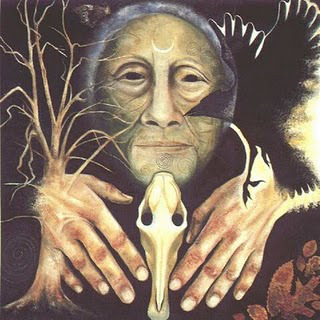
“She changes everything She touches and everything She touches changes.

The world is Her body. The world is in Her and She is in the world. She surrounds us like the air we breathe. She is as close to us as our own breath. She is energy, movement, life, and change. She is the ground of freedom, creativity, sympathy, understanding, and love. In Her we live, and move, and co-create our being. She is always there for each and every one of us, particles of atoms, cells, animals, and human animals. We are precious in Her sight. She understands and remembers us with unending sympathy. She inspires us to live creatively, joyfully, and in harmony with others in the web of life.

Yet choice is ours. The world that is Her body is co-created. The choices of every individual particle of an atom, every individual cell, every individual animal, every individual human animal play a part. The adventure of life on planet earth and in the universe as a whole will be enhanced or diminished by the choices we make. She hears the cries of the world, sharing our sorrows with infinite compassion.

In a still, small voice, She whispers the desire of Her heart: Life is meant to be enjoyed. She sets before us life and death. We can choose life. Change is. Touch is. Everything we touch can change.”

~Carol P. Christ
She Who Changes: Re-imagining
the Divine in the World

🌙

Safe travels, Carol.
(1945-2021)

#goddess
sacredfeminine
#herstorymatters

🌙

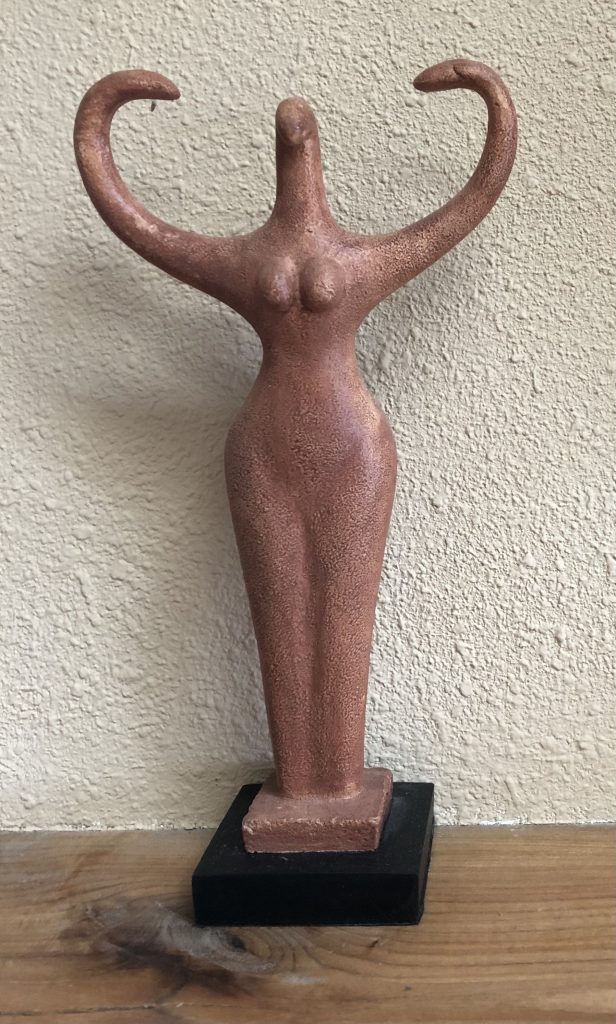
Image: Bird Woman-Goddess figure
Edfu Egypt, 4000 BCE
Photo by Nancy L
My Kind of World

“Shamans live in a world where the Creator is not separate from the Creation, Heaven is not separate from Earth, and Spirit and matter infuse each other. There is no division between the body and the spirit, nor between the visible world of form and the invisible world of energy.”

~Alberto Villoldo

🌙

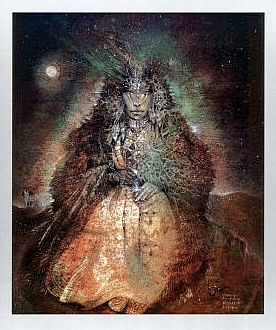
Image: Healer
by Susan Seddon Boulet

In Every Breath

“The worst thing we ever did
was put God in the sky
out of reach

pulling the divinity
from the leaf,
sifting out the holy from our bones,
insisting God isn’t bursting dazzlement
through everything we’ve made
a hard commitment to see as ordinary,
stripping the sacred from everywhere
to put in a cloud man elsewhere,
prying closeness from your heart.

The worst thing we ever did
was take the dance and the song
out of prayer
made it sit up straight
and cross its legs
removed it of rejoicing
wiped clean its hip sway,
its questions,
its ecstatic yowl,
its tears.

The worst thing we ever did is pretend
God isn’t the easiest thing
in this Universe
available to every soul
in every breath”

~Chelan Harkin
from her book, ‘Susceptible to Light’

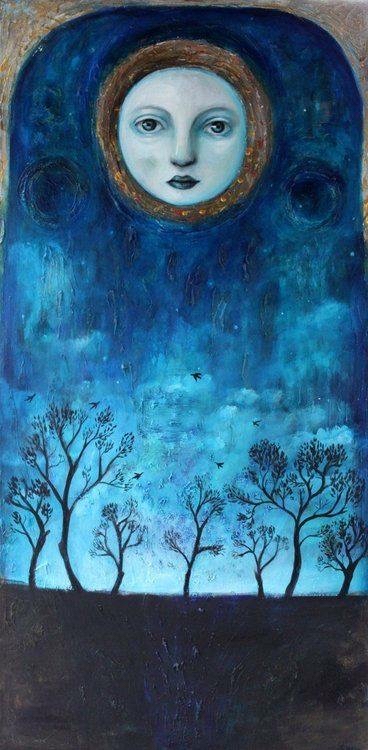
Image: Moonlight
by Felicia Olin

She is the Source

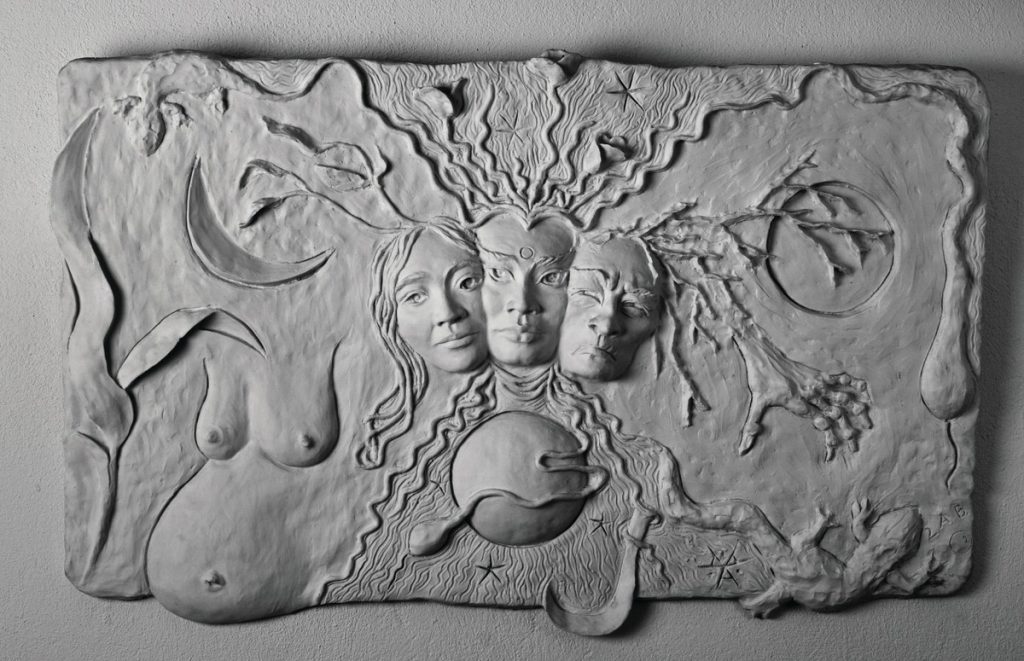
Sculpture by Agnes Arellano

She is intuition,
she is far-seer,
she is deep listener,
she is loyal heart.
She encourages humans to remain multilingual;
fluent in the languages of dreams, passion, and poetry.
She whispers from night dreams,
she leaves behind on the terrain of a woman’s soul
a coarse hair and muddy footprints.
These fill women with longing to find her, free her, and love her.
She is ideas, feelings, urges, and memory.
She has been lost and half-forgotten for a long, long time.
She is the source,
the light,
the night,
the dark,
and daybreak.

~Clarissa Pinkola Estes
🌙☀️

She Has Always Been With Us

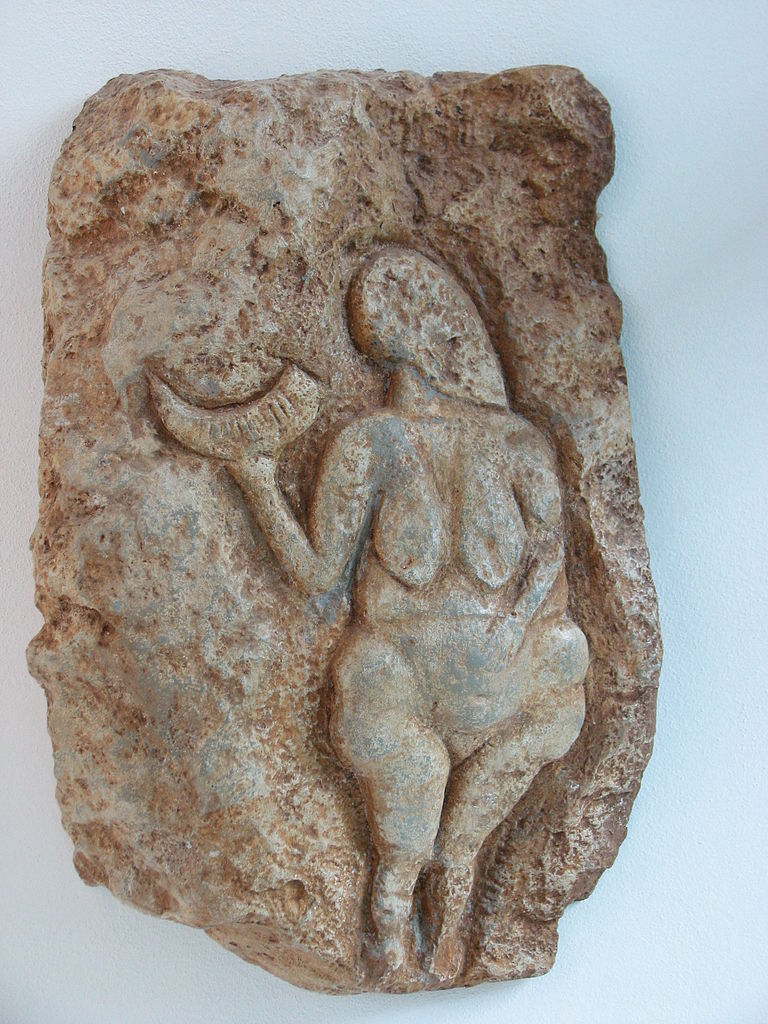
Mother Goddess, 27,000 BCE

“Originally the Goddess ruled, or co-created, the magical life cycle forces of sexuality, birth, life and death. With the coming of patriarchal religions, the power of life and death became prerogatives of the male God, while sexuality and magic were split off from procreation and motherhood.”
-Barbara Koltuv, The Book of Lilith

——-
Image: the Laussel Relief 27,000 BCE. Found in southern France. It depicts the connection between a woman’s body and the mystery of the cosmos; one hand holds a crescent moon and the other points to her pelvis. Archeologists debate about what the 13 lines on the crescent moon signify. One possibility: 29,000 years ago, humans already knew that there are 13 moon cycles in a year.

🌙 ❤️

#SacredFem
#Herstory

Keep It Hollow

The Spaniards came to our village in 1524, but they couldn’t get anybody to go to their church, so they demolished our old temple and used the stones to build a new church on the same site. (This was a common practice.) But the Tzutujil people are crafty. They watched as the old temple stones were used to build the new church, and they memorized where each one went. As far as the Tzutujil were concerned, this strange, square European church was just a reconfiguration of the old. (When I was learning to be a shaman, I had to memorize where all those damn stones were, because they were all holy. It was like being a novice taxi driver in London.)

The Catholic priests abandoned the village in the 1600s because of earthquakes and cholera, then came back fifty years later and found a big hole in the middle of the church. “What is that?” they said. By then, the Indians knew the priests destroyed everything relating to the native religion, so the Indians said, “When we reenact the crucifixion of Jesus, this is the hole where we put the cross.”


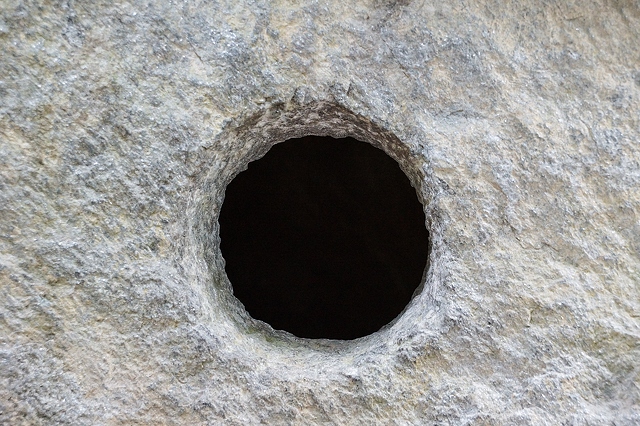
In truth, that hole was a hollow place that was never to be filled, because it led to another hollow place left over from the temple that had been there originally, and that place was connected to all the other layers of existence.
For four and a half centuries, the Indians kept their traditions intact in a way that the Europeans couldn’t see or understand. If the Spaniards asked, “Where is your God?” the Indians would point to this empty hole. But when the American clergy came in the 1950s, they weren’t fooled. They said, “This is paganism.” And so, eventually, they filled the empty place with concrete.


I was there when that happened, in 1976. I was livid. I went to the village council and ranted and raved about how terrible it was. The old men calmly smoked their cigars and agreed. After an hour or so, when I was out of breath, they started talking about something totally unrelated. I asked, “Doesn’t anybody care about this?”


“Oh, yeah,” they said. “We care. But these Christians are idiots if they think they can just eradicate the conduit from this world to the next with a little mud. That’s as ridiculous as you worrying about it. But if you must do something, here’s a pick, shovel, and chisel. Dig it out.”


So some old men and I dug out the hole. Then the Catholics filled the hole back up, and two weeks later we dug it out again. We went back and forth this way five times until, finally, somebody made a stone cover for the hole, so the Catholics could pretend it wasn’t there, and we could pull the cover off whenever we wanted to use it.


That’s how the spirit is now in this country. The hole, the hollow place that must be fed, is still there, but it’s covered over with spiritual amnesia. We try to fill up that beautiful hollow place with drugs, television, potato chips — anything. But it can’t be filled. It needs to be kept hollow.


~Martin Prechtel

Bone Moon Wisdom

We locked up our wisdom into our bones
And swallowed the keys
They sank in our rivers of blood
And we forgot the maps
Because we had to forget the mysteries
To keep them safe.

We wove our hair into brooms
And swept over our paths
And then burned the earth with our rage
We didn’t teach our children
It was the only way to protect them,
we thought.

But in them we planted seeds, seeds and keys
And told them stories and riddles and songs
With no roots, just tangled threads
That would take years to unwind
Just enough time
For the rains to fall again
And put out the fires.

For the dams to break
For the rivers to flood
For the paths to be walked again
For the soil to breathe.

And as the old bones crumble
Deep beneath the rubble,
We find we’ve always had the keys.
Our stories and our maps
Our paths are revealed to some
And the seeds grow again.
The threads are unspun
And woven again

~Amara Bronwyn Hollow Bones